Featured Projects

Project Showcase

Production AI systems, end to end — each one a case study in the problems that actually matter: grounding LLM output, orchestrating agents, surviving failures, and shipping.

01
Featured

Lemma

AI Research Commercialization Platform — From Paper to Fundable Spinout

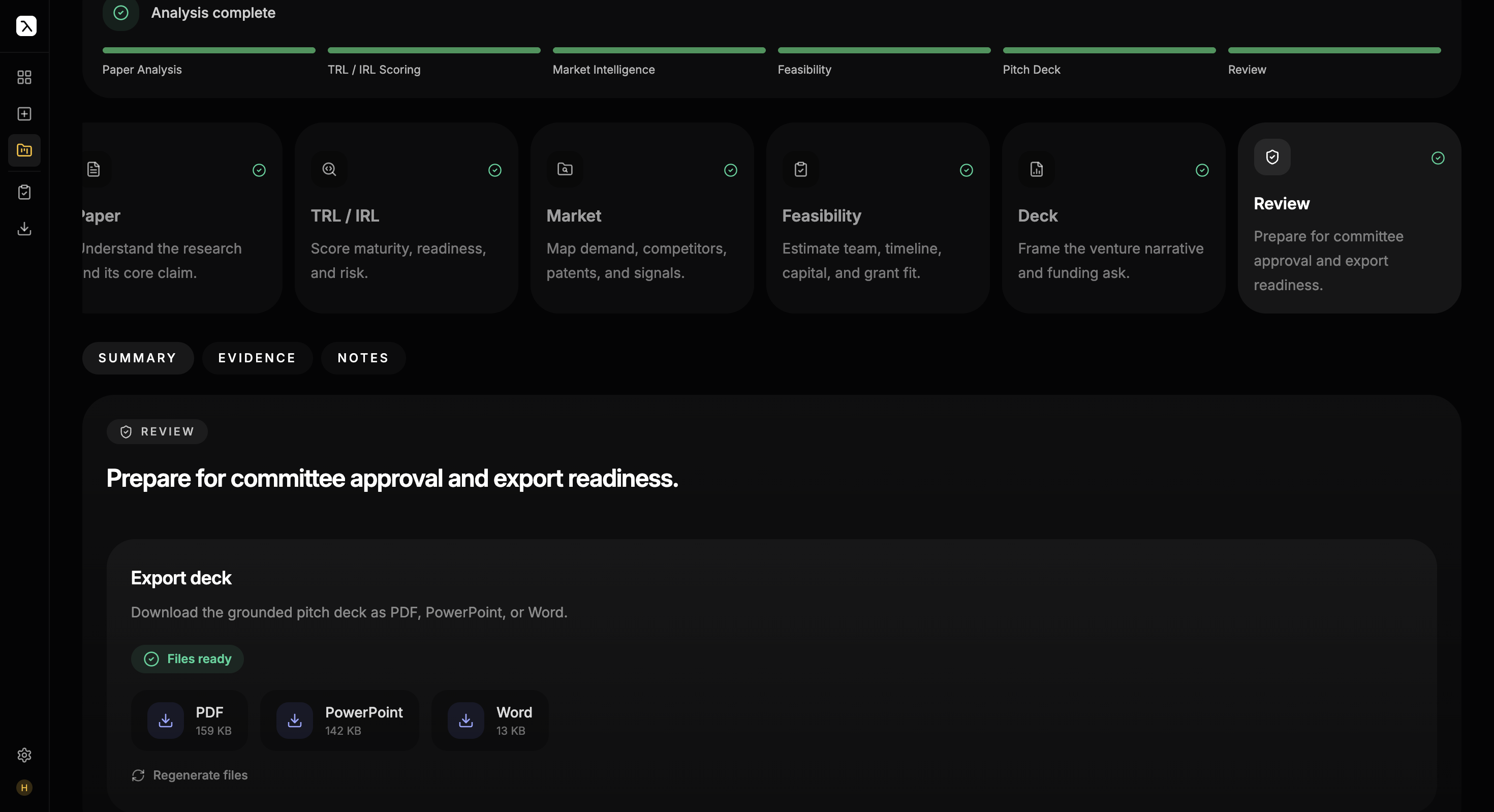
Lemma turns research into a fundable spinout. Upload a research paper and five specialized AI agents take over — understanding the paper and its core claim, scoring technology & investment readiness (TRL/IRL), mapping market demand, competitors and patent signals, estimating feasibility across team, timeline, capital and grant fit, and framing the venture narrative into an investor-ready pitch deck — all in minutes.

The platform features a six-stage analysis workflow with grounded evidence and hallucination checks, collaborative annotation with citations and TRL evidence highlighting, research gap analysis, and one-click export of the generated pitch deck to PDF, PowerPoint, or Word. Built for research you haven't published yet: end-to-end encryption, zero data retention, and institutional-grade privacy designed to meet the trust requirements of TTOs and incubation cells.
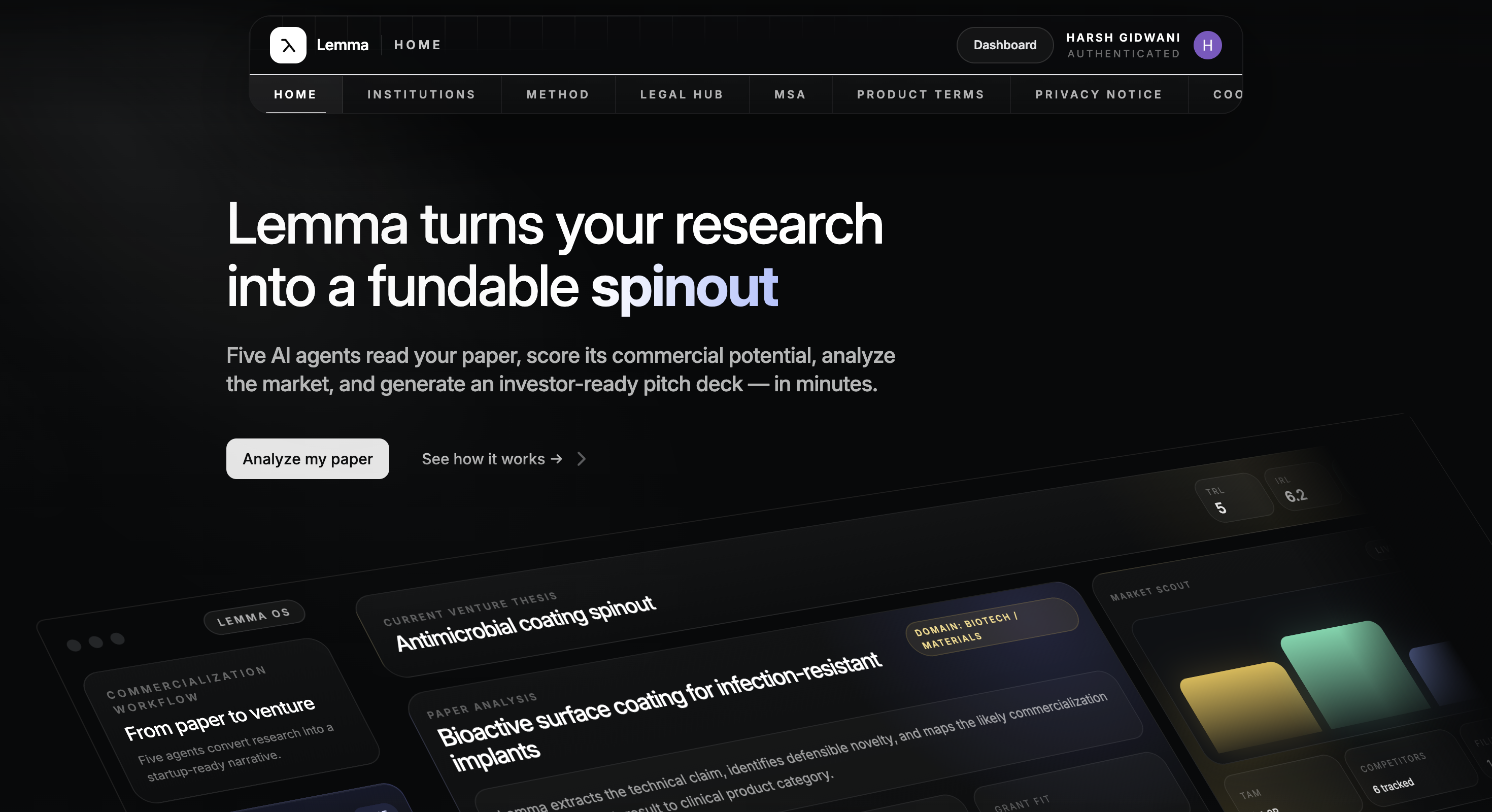

Lemma - Research to Fundable Spinout
Lemma - Research Portfolio Dashboard
Lemma - Six-Stage Analysis Pipeline
Case Study

TTOs sit on backlogs of papers and need first-pass commercialization verdicts. Manual review takes experts days per paper; single-prompt LLM evaluation invents market figures and readiness scores nothing can be traced to.

Three runtime planes: fast Next.js 14 API routes, a durable Inngest pipeline running five agents in isolated step.run() blocks with 3× retries, and a Pusher + polling notification layer. Neon Postgres via Prisma persists one schema-validated model per agent output.

Hallucinated market data; multi-minute LLM jobs on serverless timeout limits; partial failures mid-pipeline (search down, model 503s); keeping five agents' outputs mutually consistent; unreliable LLM output shapes.

Closed-world retrieval (market synthesis can only cite URLs actually retrieved via Tavily), a ref-menu restricting the pitch builder to enumerated upstream facts, adversarial critique agents at three points with bounded one-shot regeneration, skip-don't-fail semantics for non-core stages, and dual Zod + Gemini responseSchema enforcement.

Live in production at uselemma.vercel.app — paper to fully-cited investor deck in minutes, with every slide claim traceable to a source URL or upstream finding, consistent across PDF, PPTX, and DOCX exports. Full architecture write-up in the dedicated case study.

5 AI Agents
TRL/IRL Readiness Scoring
Minutes Paper → Pitch Deck
E2E Encrypted Pipeline
Technology Stack
Next.js 14 (App Router) TypeScript Inngest (Durable Execution) Google Gemini Tavily Retrieval Neon Postgres + Prisma Zod Validation Clerk · R2 · Upstash · Pusher
Key Features
Five specialized AI agents: paper analysis, TRL/IRL scoring, market intelligence, feasibility, and pitch deck
Six-stage analysis workflow with grounded evidence and hallucination checks
Market mapping: demand, competitors, patents, and commercialization signals
Feasibility estimation across team, timeline, capital, and grant fit
Investor-ready pitch deck export to PDF, PowerPoint, or Word
End-to-end encryption with zero data retention for unpublished research

💼 For detailed project information, technical documentation, or collaboration opportunities, please contact me at harshgidwani2007@gmail.com
02
Featured

GrowAI

End-to-End AI Marketing Automation Platform

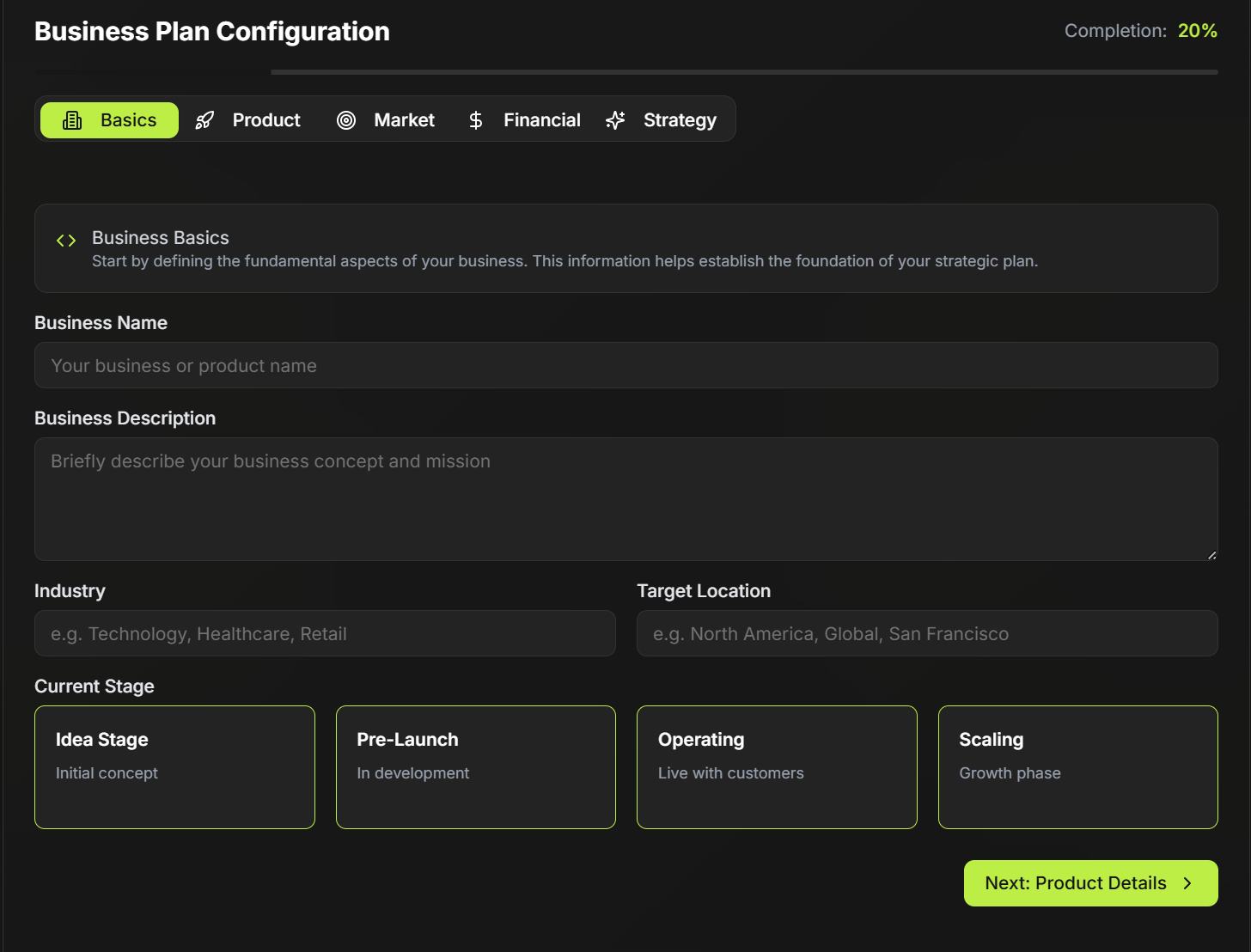
GrowAI is a fully-automated marketing intelligence platform engineered to convert raw data into multi-channel marketing assets. The system ingests product data via CSV/Excel, preprocesses it using rule-driven attribute extraction, and generates content using a fine-tuned LLM pipeline built on top of the Llama architecture. GrowAI produces commercial-grade ad scripts, short-form video content plans, email campaigns, and social media copy, adapting style through transformer-based tone modulation.

The platform incorporates a scalable event-driven backend architecture, GPU-optimized inference endpoints, and real-time performance feedback loops. By combining automated content generation with conversion-focused analytics, GrowAI minimizes manual creative effort and delivers a measurable uplift in marketing ROI without requiring a dedicated creative team.

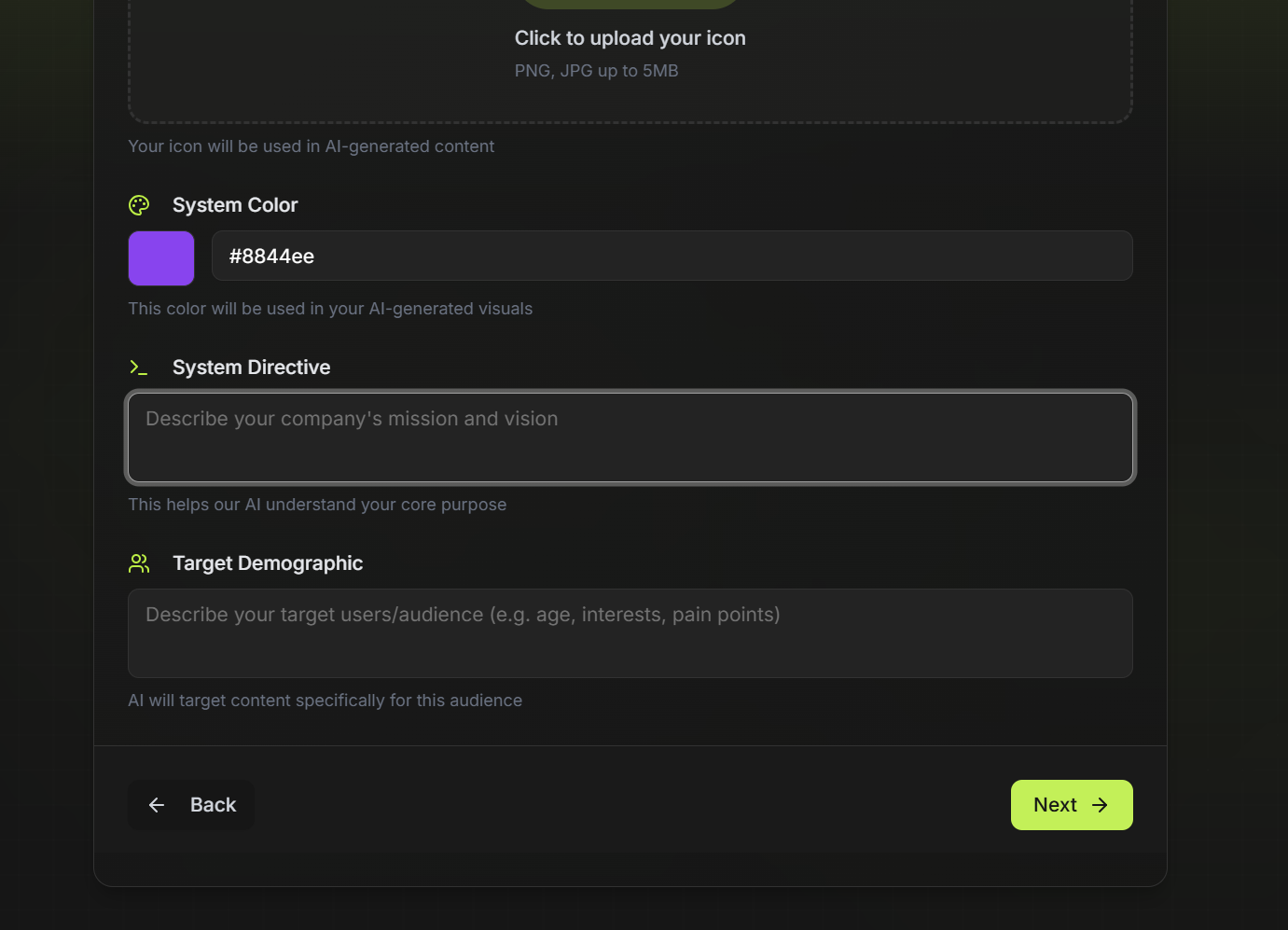
GrowAI - System Setup
GrowAI - Product Details
GrowAI & Finura Integration
Case Study

Small teams without dedicated creatives can't sustain consistent multi-channel marketing. Generic LLM output drifts off-brand and ignores the product data that actually differentiates the offer.

Event-driven backend: CSV/Excel ingestion → rule-driven attribute extraction → fine-tuned Llama-based generation served over FastAPI on GPU-optimized inference endpoints, with transformer-based tone modulation per channel.

Grounding generated copy in ingested product attributes, controlling tone per channel from one model, and keeping inference latency interactive on GPU budgets.

Deterministic preprocessing extracts structured attributes before any LLM call, so generation works from clean facts rather than raw spreadsheets. Fine-tuning plus tone modulation handles channel adaptation; conversion analytics close the feedback loop.

10k+ marketing assets generated across ad, email, video, and social channels, cutting manual creative time by ~80% in project benchmarks.

10k+ Assets Generated
5x ROI Increase
80% Time Saved
Multi-Channel Distribution
Technology Stack
Llama Architecture Python Transformers GPU Optimization FastAPI Event-Driven Backend NLP Fine-Tuned LLM
Key Features
Automated CSV/Excel data ingestion with rule-driven attribute extraction
Fine-tuned Llama-based LLM for commercial-grade content generation
Multi-channel asset creation: ad scripts, videos, emails, social media
GPU-optimized inference endpoints for real-time performance
Transformer-based tone modulation and style adaptation
Conversion-focused analytics with performance feedback loops

💼 For detailed project information, technical documentation, or collaboration opportunities, please contact me at harshgidwani2007@gmail.com
03
Live

Finura

Smart Financial Planning & Budget Intelligence System

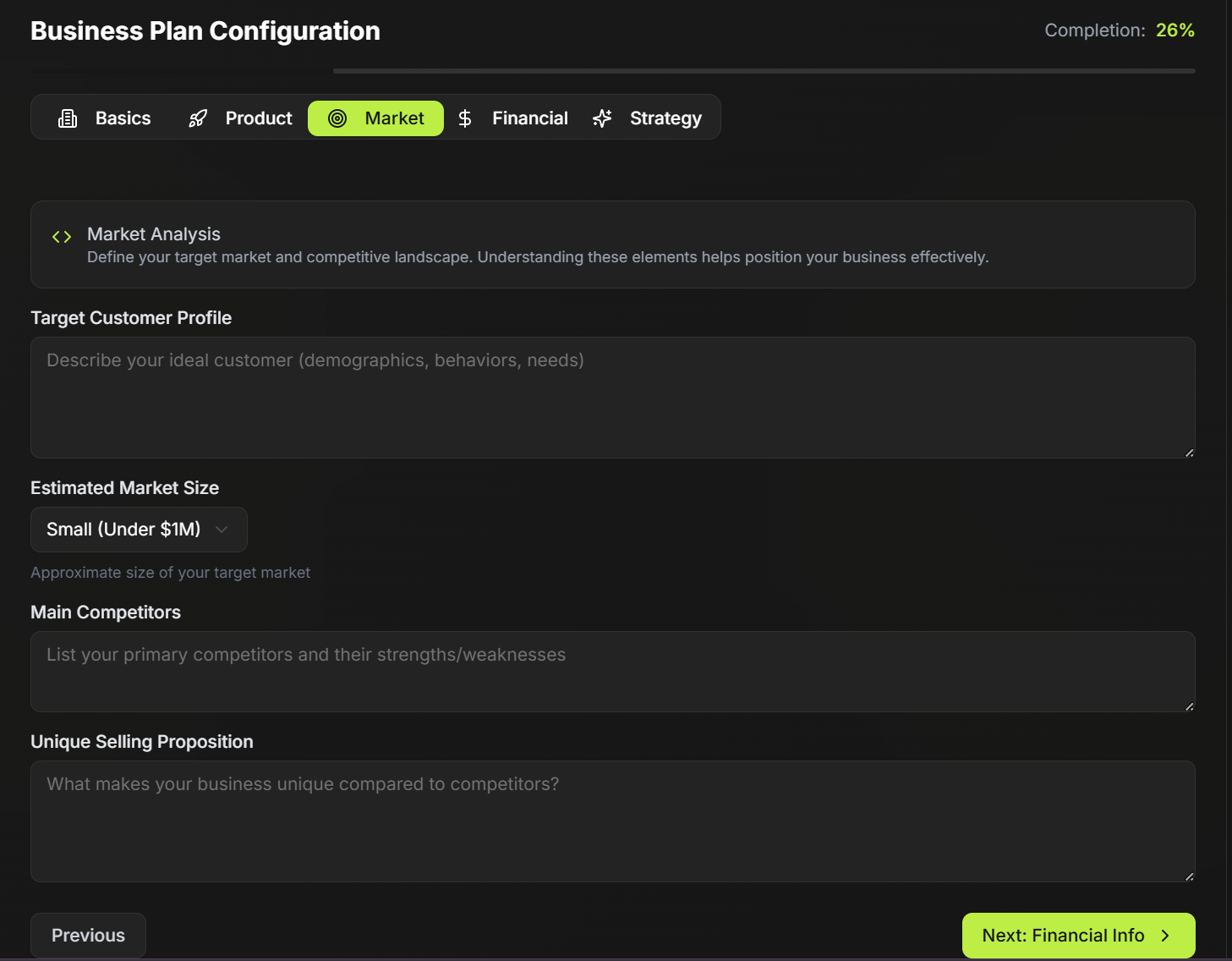
Finura is a personal finance automation engine built to analyze transaction behavior, predict spending anomalies, and enforce user-defined financial objectives. It leverages a hybrid inference system: rule-based categorization powered by deterministic spending logic, combined with LSTM-driven recurrent forecasting for expense prediction and financial health scoring.

The platform dynamically recommends budgets using statistical models fused with sequence-based forecasting, and visually communicates spending behavior through an adaptive analytics dashboard. Security and privacy are central to the system architecture, employing AES-256 encrypted storage, compartmentalized process execution, and hashed identity mapping. Finura transforms scattered financial data into actionable insights, enabling users to achieve long-term financial control through AI-augmented planning and automated, data-driven decision support.

Case Study

Personal finance tools either bucket transactions with brittle rules or hide everything behind opaque scores — neither predicts where spending is heading, and few treat financial data with real security discipline.

Hybrid inference: deterministic rule-based categorization for unambiguous transactions, LSTM recurrent forecasting for expense trajectories and financial-health scoring, statistical fusion models for budget recommendations.

Time-series forecasting on sparse, irregular personal transaction data; separating genuine anomalies from one-off purchases; storing highly sensitive financial data safely.

The rule layer supplies clean labeled sequences to the LSTM, improving forecast stability on small datasets. Anomaly alerts compare predictions against observed spending, not fixed thresholds. Security is layered: AES-256 storage, compartmentalized process execution, hashed identity mapping.

95% expense-prediction accuracy on held-out spending data, with real-time anomaly alerts and automated, data-driven budget recommendations.

95% Prediction Accuracy
AES-256 Encryption
Real-Time Analytics
LSTM Forecasting
Technology Stack
LSTM Networks Python TensorFlow AES-256 Encryption Time Series Analysis Statistical Modeling Data Visualization Secure Architecture
Key Features
Hybrid inference: rule-based + LSTM recurrent forecasting
Spending anomaly detection with predictive alerts
Dynamic budget recommendations using statistical fusion models
AES-256 encrypted storage with compartmentalized execution
Adaptive analytics dashboard with behavioral insights
Financial health scoring with actionable recommendations

💼 For detailed project information, technical documentation, or collaboration opportunities, please contact me at harshgidwani2007@gmail.com
04
Enterprise

CognisCRM

AI-Driven Customer Lifecycle & Business Intelligence Suite

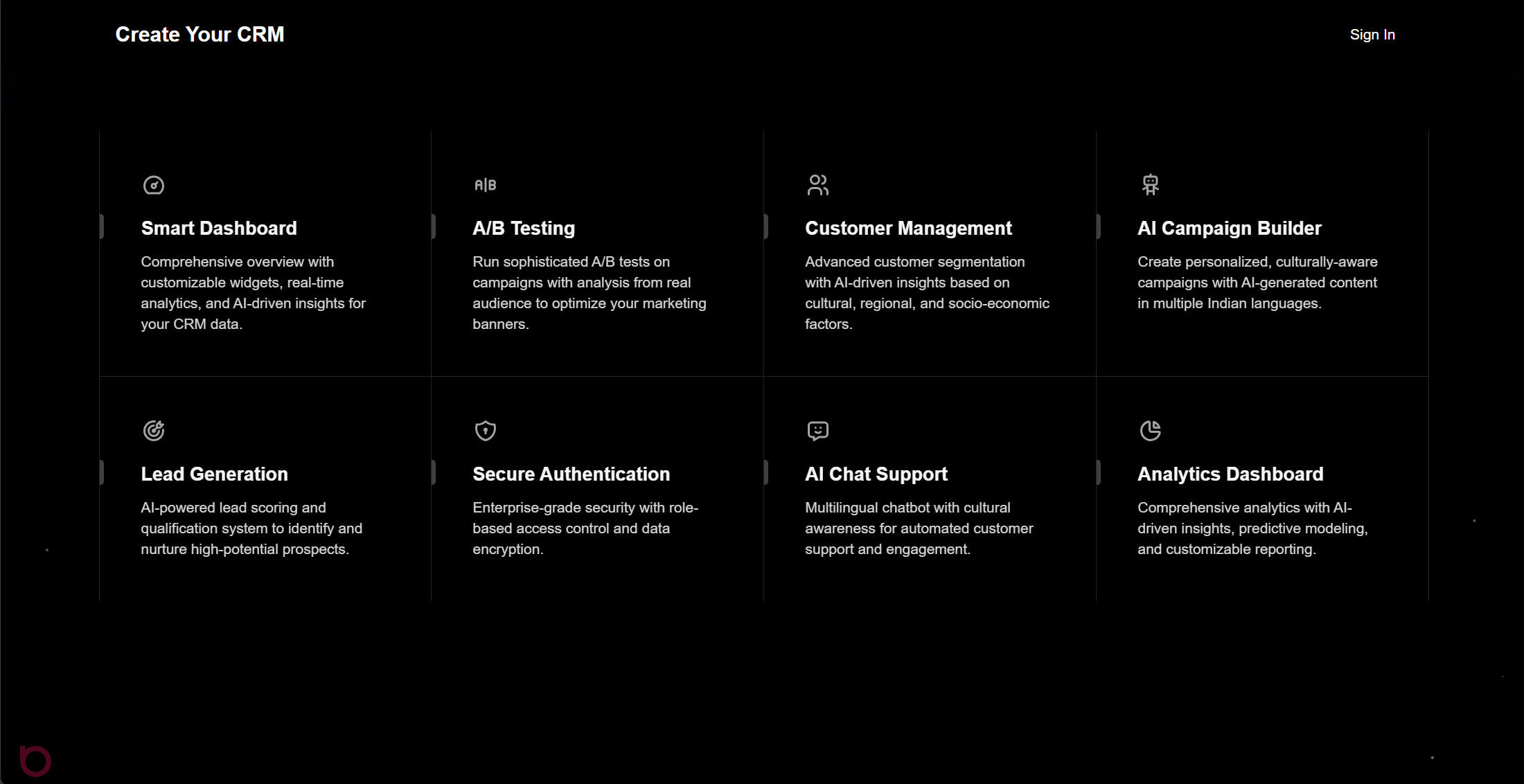
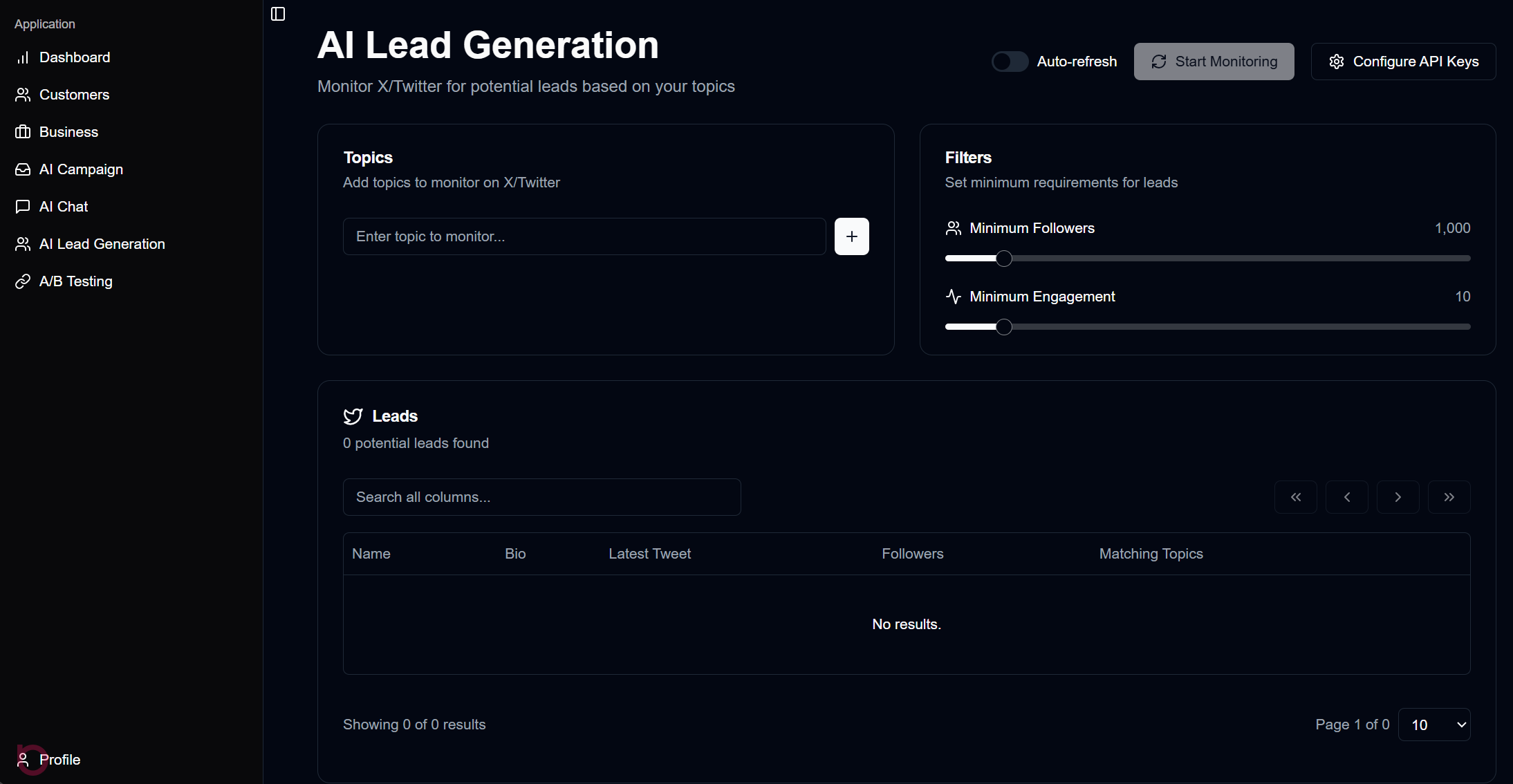
CognisCRM is a next-generation customer lifecycle platform that applies machine intelligence to lead acquisition, retention optimization, and business analytics. Built on Next.js for reactive UI orchestration and integrated with Llama 3.1 for multimodal lead intelligence, the system autonomously prioritizes customer pipelines using predictive scoring models.

It segments prospects through unsupervised clustering, identifies churn risk using behavioral profiling, and enriches CRM operations with automated communication, recommendation routing, and opportunity forecasting. Enterprise scalability is achieved using modular API endpoints, microservice-aligned backend services, and a plugin-ready AI inference layer. By merging data analytics, generative intelligence, and operational automation, CognisCRM delivers a measurable reduction in lead leakage, faster deal closures, and a strategically optimized sales workflow without requiring manual intervention.

CognisCRM - AI Lead Generation Dashboard
CognisCRM - Feature Overview
Case Study

Sales teams leak leads because CRMs record activity but don't reason about it — pipeline prioritization, churn detection, and follow-up routing all stay manual.

Next.js frontend over microservice-aligned backend services with a plugin-ready AI inference layer: Llama 3.1 for multimodal lead intelligence, predictive scoring for pipeline ranking, unsupervised clustering for segmentation, behavioral profiling for churn.

Combining LLM-based lead understanding with classical ML scoring in one coherent pipeline, and keeping the inference layer swappable so models upgrade without rewriting services.

Each intelligence concern — scoring, segmentation, churn, routing — is its own service behind modular API endpoints, with the AI inference layer as an explicit plugin boundary. Automated communication routing acts on model outputs without manual triage.

45% lift in lead conversion and 60% faster deal closures in project benchmarks, with autonomous pipeline prioritization replacing manual triage.

45% Lead Conversion
60% Faster Closures
AI-Powered Insights
Enterprise Scale
Technology Stack
Next.js Llama 3.1 Python Microservices Predictive Analytics Unsupervised Learning API Architecture Behavioral Profiling
Key Features
Llama 3.1 integration for multimodal lead intelligence
Predictive scoring models for autonomous pipeline prioritization
Unsupervised clustering for intelligent prospect segmentation
Churn risk identification through behavioral profiling
Automated communication and recommendation routing
Microservice architecture with plugin-ready AI inference layer

💼 For detailed project information, technical documentation, or collaboration opportunities, please contact me at harshgidwani2007@gmail.com